
Few research peptides generate as much naming confusion as CJC-1295, and nearly all of it traces to three letters: DAC. Shoppers see “CJC-1295 with DAC” and “CJC-1295 no DAC” listed as separate products and reasonably wonder whether they are the same compound, different compounds, or two versions of one. The answer is the last of those, and understanding what DAC does makes the whole category clear.
The base molecule
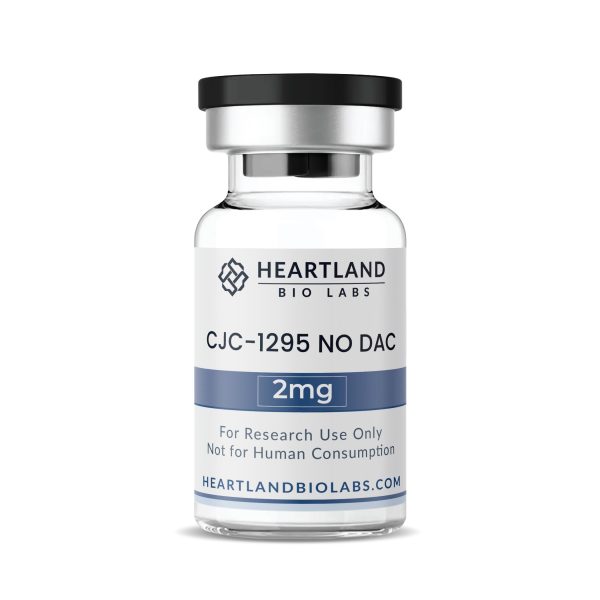
CJC-1295 is a synthetic analogue of growth hormone-releasing hormone (GHRH), specifically a modified fragment of the first 29 amino acids. In its base form, this modified GHRH fragment is what is often sold as “CJC-1295 no DAC,” and it is functionally very close to another compound you will see, Modified GRF (1-29). This is the version without the extra attachment. The CJC-1295 research overview covers the base structure.
What DAC adds
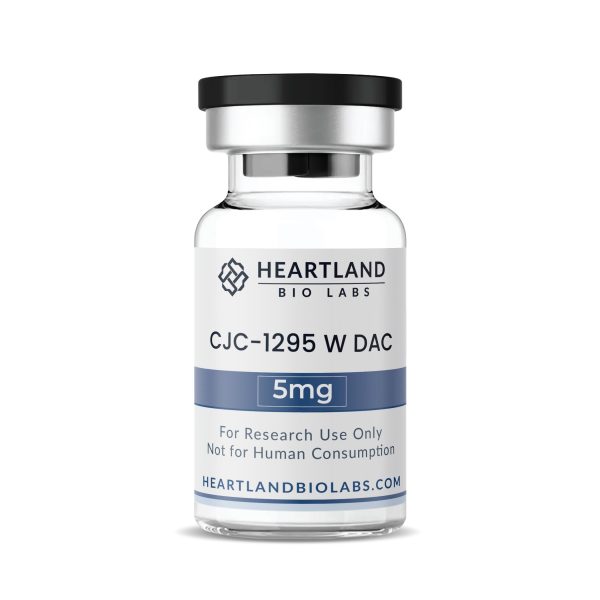
DAC stands for Drug Affinity Complex. It is a chemical group added to the base peptide, and its job is entirely about longevity in solution. The DAC modification allows the peptide to bind reversibly to albumin, the most abundant protein in blood plasma. By tethering itself to a large, long-lived carrier protein, the DAC-modified peptide resists the rapid clearance that a small unmodified peptide would undergo. In practical research terms, “with DAC” is the long-acting form and “no DAC” is the short-acting form. Same underlying GHRH analogue, one structural addition that dramatically changes how long it persists.
Why researchers choose one or the other
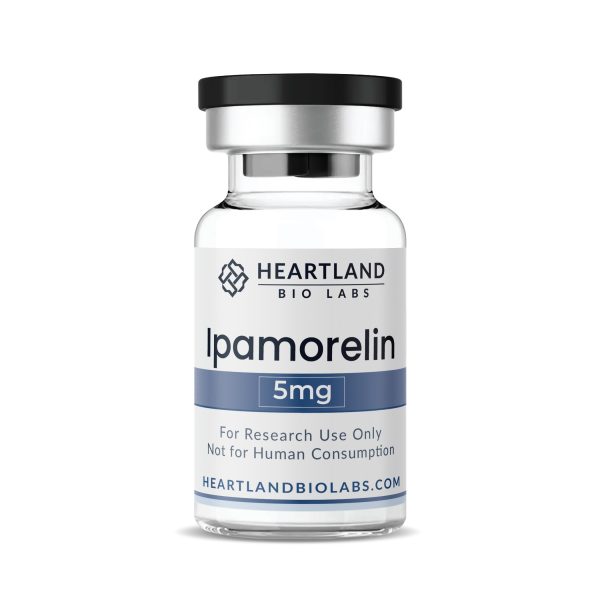
The choice is about experimental timing, not potency. A protocol studying short, pulsatile signaling calls for the no-DAC form, whose brief activity window mimics the body’s own rhythmic GHRH release. A protocol that needs sustained presence calls for the DAC form. This is also why CJC-1295 no DAC is frequently paired with a ghrelin-receptor compound such as ipamorelin: the two short-acting peptides can be studied together in the same brief window. Our article on the CJC-1295 and ipamorelin blend covers that pairing.
The naming traps to watch
Two confusions come up constantly. First, “CJC-1295 no DAC” and “Modified GRF (1-29)” refer to essentially the same molecule, so seeing both names does not mean two different compounds. Second, some listings say simply “CJC-1295” without specifying, which historically meant the DAC form but cannot be assumed. When the form is not stated, it should be confirmed, because the difference between long-acting and short-acting is the entire point of the compound.
Verifying what you received
Both forms are verified identically, and identity testing matters here for the same reason it does with any closely related pair: the DAC form and the no-DAC form differ by a defined structural addition, and mass spectrometry reads that difference directly. A certificate confirming the molecular weight is confirming which form is actually in the vial. Purity is measured by high-performance liquid chromatography. Our guide to reading a certificate of analysis explains what to look for.
The bottom line
DAC is one modification, Drug Affinity Complex, that lets CJC-1295 bind albumin and persist far longer in solution. “With DAC” is long-acting, “no DAC” is short-acting and equivalent to Modified GRF (1-29), and the two are otherwise the same GHRH analogue. Researchers pick the form that matches their timing, and verify by mass because the difference between them is exactly what identity testing detects.
Heartland Bio Labs supplies these peptides strictly for laboratory research use. Nothing in this article is guidance for human or veterinary use of any compound.
Research compounds in this article
For research use only. Not for human consumption. Every product ships with a published certificate of analysis.