
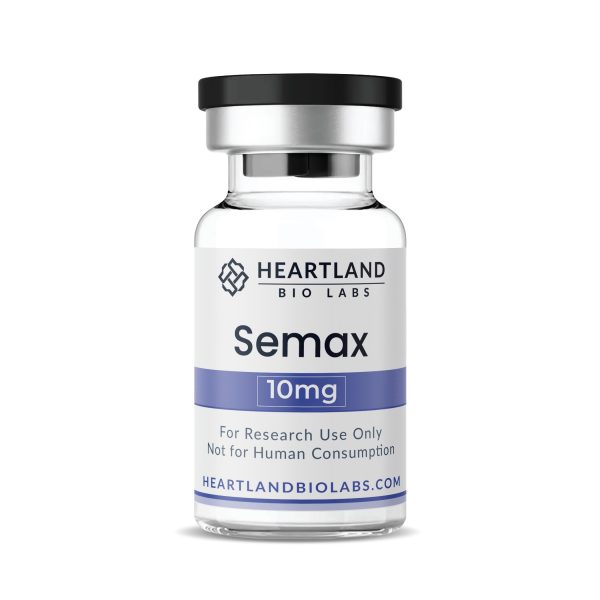
Semax occupies an unusual position in peptide research: a compound with decades of published work behind it, most of which was never written in English. This overview covers what semax is structurally, where it comes from, why the language of its literature shapes what researchers know about it, and how it is verified.
What Semax Is
Semax is a synthetic heptapeptide built from two parts: the 4-7 fragment of ACTH, the adrenocorticotropic hormone, joined to a proline glycine proline tail. The ACTH fragment carries the region of the parent hormone studied for activity in neural tissue models, and the PGP tail was added to protect the molecule from rapid enzymatic breakdown, extending its usable life in experimental systems.
The Russian Literature Problem
Semax was developed at the Institute of Molecular Genetics in Moscow, and the bulk of its research record exists in Russian language journals that were never fully translated. English language reviews cite a fraction of the primary work. For researchers this cuts both ways: there is far more published material than an English search reveals, and evaluating its quality requires more effort than usual. Our article on Semax and Selank, the Russian neuropeptides covers that history and how the two compounds relate.
Semax and Selank
Semax is half of a pair. Selank came from the same research tradition using the same design logic, a natural peptide fragment stabilized with a PGP tail, but built on tuftsin rather than ACTH. Researchers comparing the two are comparing parent molecules more than design strategies, which is what makes the pair useful as complementary probes in the cognitive and longevity research category.
Stability and Verification
As a short peptide with no cysteine, lyophilized semax stores well cold, dry, and dark, with the standard preference for minimal freeze thaw cycling in solution. Verification follows the catalog pattern: mass spectrometry confirms identity, HPLC quantifies purity, and net peptide content ties the certificate to the label. Certificates for our material are published through the COA portal, and our guide to reading a certificate of analysis for peptides explains each field.
Research Use Only
Semax is supplied strictly for laboratory research by qualified professionals. It is not for human or veterinary use of any kind. Nothing in this overview is a protocol, a recommendation, or a claim of therapeutic effect.
Research compounds in this article
For research use only. Not for human consumption. Every product ships with a published certificate of analysis.