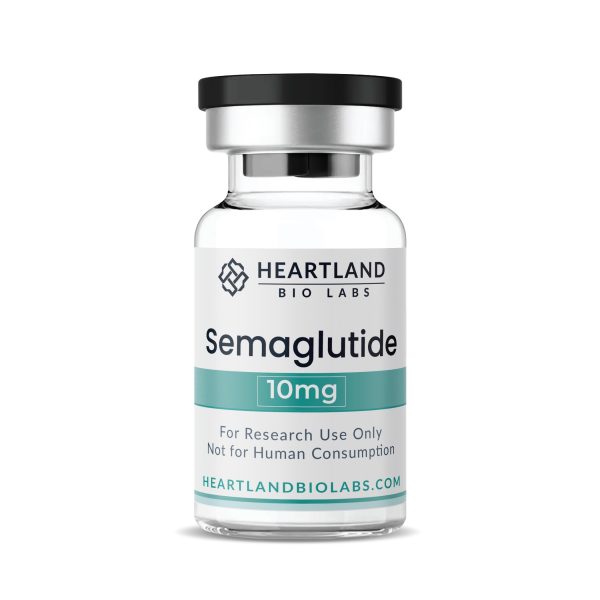
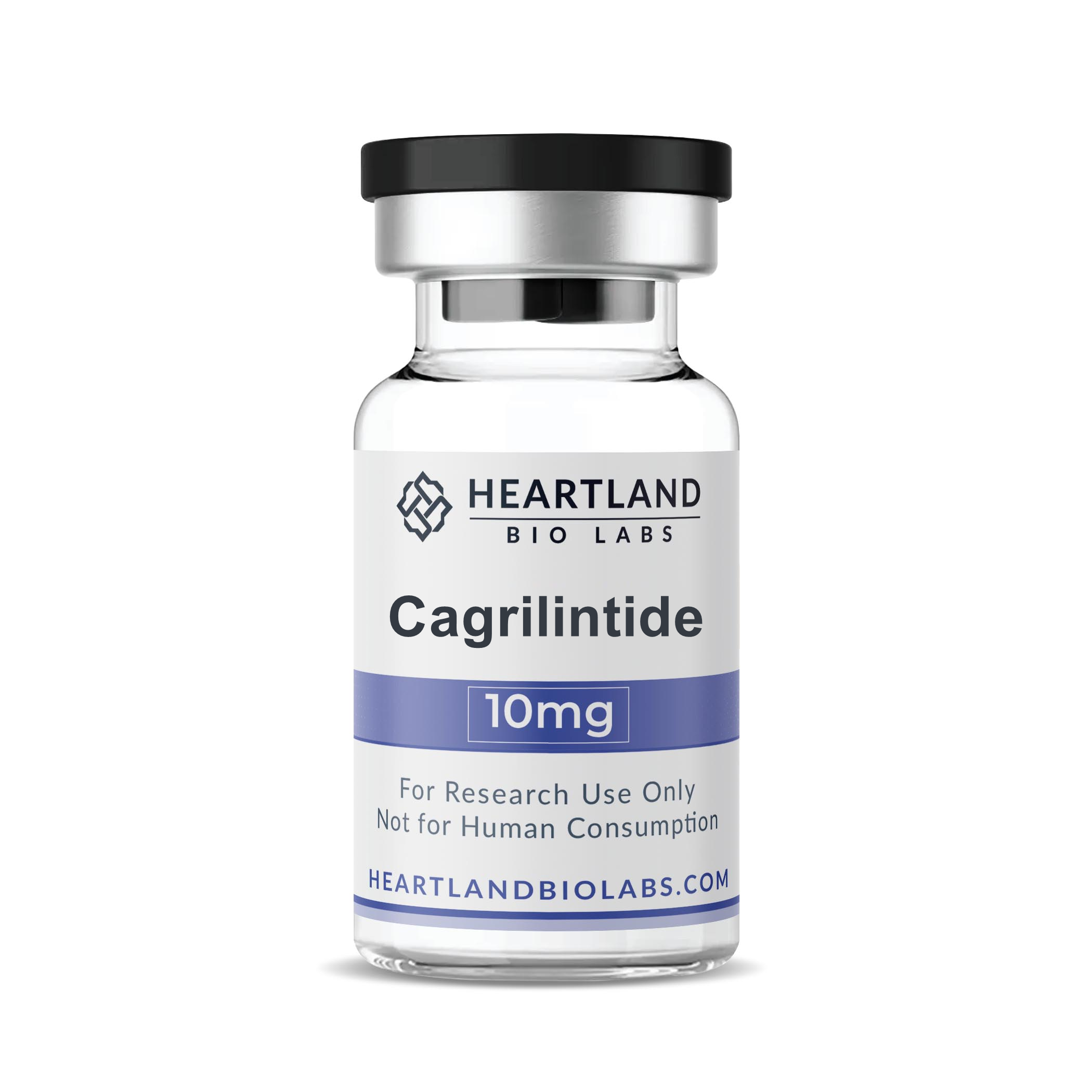
Cagrilintide is a synthetic long-acting analogue of amylin, the 37-amino acid hormone the pancreas co-secretes with insulin. Every other metabolic peptide in this catalog works the incretin axis; cagrilintide is the one that brings the second hormone system, amylin signaling, into a research program. It is also one half of the most watched combination in current metabolic research, studied alongside semaglutide. Heartland Bio Labs supplies cagrilintide for laboratory research in 10mg vials with independent purity and identity verification.
What cagrilintide is
Native amylin acts on receptors formed by the calcitonin receptor paired with receptor-activity-modifying proteins, a signaling family entirely separate from the GLP-1 and GIP receptors that incretin peptides engage. Like the modern incretin analogues, cagrilintide carries a fatty diacid modification that binds albumin and extends its persistence from minutes to days, which is what made sustained amylin-receptor research practical. The molecule runs to 37 residues on the amylin backbone with targeted substitutions for stability.
Why researchers pair it with semaglutide
The most prominent research use of cagrilintide is combination work with semaglutide, pairing amylin-receptor signaling with GLP-1 receptor signaling in a single study design. The two pathways are distinct and complementary, which is exactly what makes the combination scientifically interesting: it lets laboratories examine how the two hormone systems interact rather than studying either alone. Programs running that design order both compounds here, each with its own certificate.
Where it sits among the metabolic peptides
Cagrilintide is the odd one out among the metabolic peptides: it is not an incretin at all. Our article on cagrilintide as the non-incretin amylin analogue explains what sets it apart from the GLP-1 class.
Think of the catalog's metabolic compounds as a receptor map. Semaglutide covers GLP-1 alone, tirzepatide adds GIP, and retatrutide adds glucagon receptor activity, a progression covered in our retatrutide vs tirzepatide comparison. Cagrilintide stands apart from that entire series: same era of engineering, completely different receptor family. For research programs mapping metabolic signaling broadly, it is the piece the incretin series cannot substitute for.
Product characteristics
- Synthetic long-acting amylin analogue, 37-amino acid backbone
- Fatty diacid modification, albumin binding, multi-day persistence in research models
- Acts on amylin receptors (calcitonin receptor plus RAMP complexes), not incretin receptors
- Supplied as white lyophilized powder in sealed vials
- Available strength: 10mg
- HPLC purity and mass spectrometry identity, tested by an independent laboratory
- For laboratory research use only
How this product is verified
Cagrilintide is new enough to the research supply market that unverified material is common and quality varies widely. Every Heartland product is tested by an independent analytical laboratory, HPLC for purity and mass spectrometry for identity, with certificates published in our COA portal before you are asked to order. Our guides on reading a certificate of analysis and vetting a research peptide supplier show you how to hold us, and everyone else, to that standard.
Pricing, storage, and shipping
The 10mg vial is $135, in stock, shipping same-day from the Tulsa, Oklahoma area on orders placed before 2:00 PM Central. Store lyophilized vials sealed, cool, dry, and away from light, refrigerated for longer storage; reconstitute with bacteriostatic water, swirl gently, refrigerate the solution, and use it within the window your research protocol defines. Institutional quantities run through our wholesale program.
Reconstitution math
Work out concentration (mg/mL), amount per volume and molarity for any vial size with the general peptide calculator. For the bench procedure see how to reconstitute peptides.
Research use only
Cagrilintide from Heartland Bio Labs is sold strictly for laboratory research and identification purposes. It is not a drug, it has not been evaluated by the FDA, and it is not for human or veterinary use of any kind. By purchasing, you affirm that you are qualified to handle research compounds and agree to our research use policy.