
CJC-1295 is a synthetic 29–30 amino acid analog of growth-hormone-releasing hormone (GHRH 1-29) studied in preclinical research on the somatotropic axis. It appears in two distinct forms that are frequently confused: CJC-1295 with DAC and CJC-1295 without DAC (also sold as Mod GRF 1-29). For a researcher ordering material, the difference is not cosmetic — it changes the molecule’s size, stability, and behavior in experimental models.
What the DAC actually is
DAC stands for Drug Affinity Complex: a maleimidopropionic acid linker added to a lysine residue at the C-terminus. In serum-containing systems, the DAC binds covalently to circulating albumin. In the published preclinical literature this albumin binding extends the peptide’s functional persistence dramatically compared to the unmodified analog, which is cleared quickly. The no-DAC form retains the four stabilizing amino-acid substitutions of CJC-1295 (which protect it from rapid DPP-IV cleavage) but lacks the albumin-binding linker.
Which form appears in research settings
- CJC-1295 with DAC — used where investigators want sustained GHRH-receptor activity in a model system with fewer administrations of material.
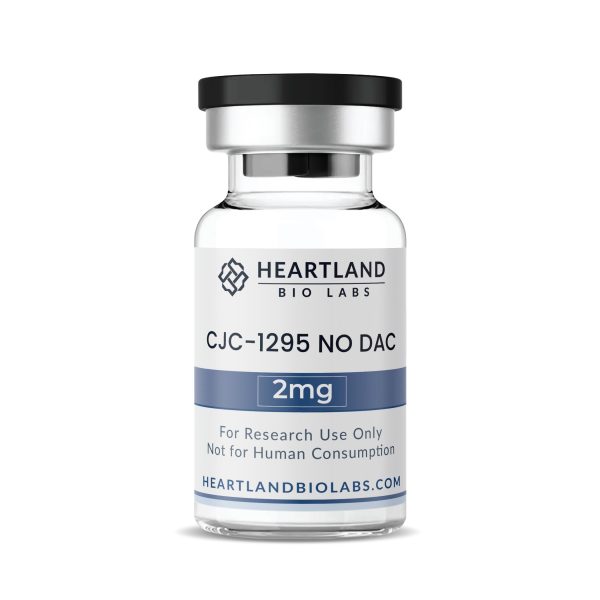
- CJC-1295 no DAC / Mod GRF 1-29 — used where pulsatile, short-window receptor activity is the study design, often paired in the literature with a ghrelin-mimetic such as ipamorelin.
Because the two forms differ in molecular weight (the DAC adds roughly 0.8 kDa), a certificate of analysis is the fastest way to confirm which form a vial actually contains — the main HPLC peak and mass data will not match if forms were swapped.
Reading a CJC-1295 certificate of analysis
A meaningful COA for this compound reports chromatographic purity (percent of total peak area), identity confirmation against a reference standard, and net peptide content per vial. Heartland Bio Labs publishes independent lab certificates for tested lots in the COA portal — search the product name and read the original laboratory PDF alongside the transcribed results. Lots are retained rather than replaced, so earlier material remains verifiable.
Handling and stability notes
Lyophilized CJC-1295 is shipped as a powder and is typically stored cold and protected from light; reconstituted material is markedly less stable and is prepared fresh in laboratory practice. The DAC form’s albumin-binding maleimide group is reactive — solutions are handled promptly after preparation in research settings.
Frequently asked research questions
Is CJC-1295 the same as sermorelin?
No. Sermorelin is unmodified GHRH(1-29); CJC-1295 carries stabilizing substitutions (and optionally the DAC linker) that change its degradation profile in experimental systems.
Why does the with-DAC form cost more?
The DAC conjugation adds a synthesis and purification step, which raises manufacturing cost per milligram.
All compounds discussed are for laboratory research use only and are not for human consumption. Nothing here is medical advice or a statement of clinical effect.
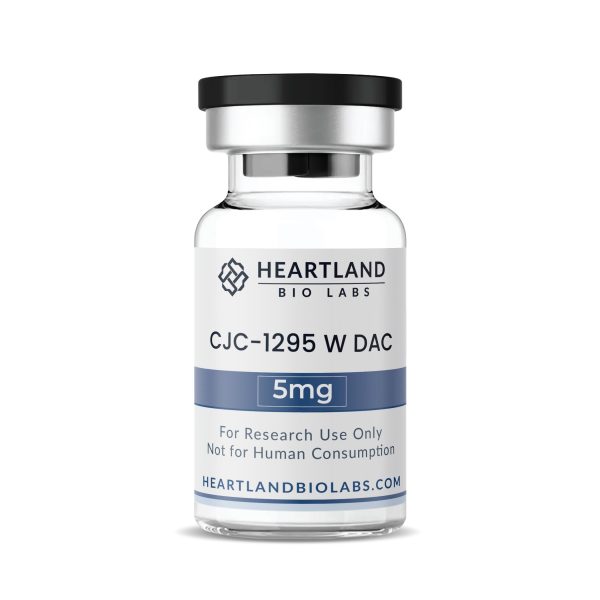
Browse the tested compound: CJC-1295 with DAC.
Research compounds in this article
For research use only. Not for human consumption. Every product ships with a published certificate of analysis.