
Melanotan 2 and PT-141 are two of the most searched melanocortin peptides in research catalogs, and they are frequently confused, in part because one is literally derived from the other. Understanding the relationship clears up most of the confusion: PT-141 is a metabolite of Melanotan 2, and the structural difference between them explains why researchers study them as distinct compounds rather than interchangeable ones.
The melanocortin receptor family
Both compounds act on melanocortin receptors, a family of five receptor subtypes distributed across different tissues. MC1R is associated in the literature with pigmentation pathways; MC4R is associated with central nervous system signaling. The reason these two peptides behave differently in research models comes down to how broadly or narrowly they engage that receptor family. A compound that activates several subtypes produces a different experimental profile than one that concentrates its activity on a single subtype.
Melanotan 2: the broader analogue
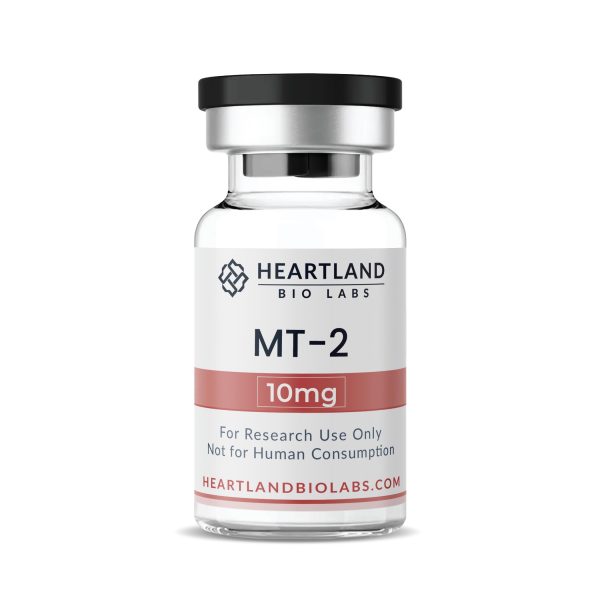
Melanotan 2 is a synthetic cyclic analogue of alpha-melanocyte-stimulating hormone (alpha-MSH). It is a relatively non-selective melanocortin agonist, meaning it engages multiple receptor subtypes rather than singling one out. Its cyclic structure gives it stability that the native hormone lacks. In the research literature it is studied precisely because of this broad melanocortin activity, and the melanotan name reflects the pigmentation pathway it was originally investigated around. You can read more on the MT-2 product page.
PT-141: the focused descendant
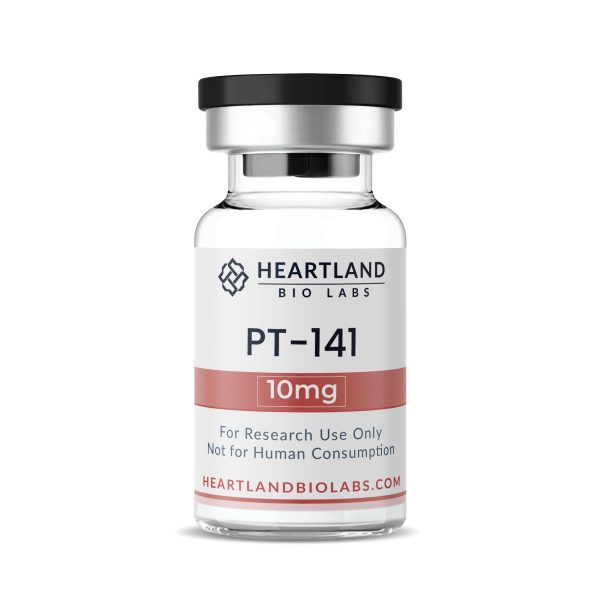
PT-141, also called bremelanotide, is a metabolite of Melanotan 2. Removing a single terminal group from the MT-2 structure yields PT-141, and that small change shifts the selectivity: PT-141 is characterized in the literature as acting more specifically through MC4R, the central-nervous-system-associated subtype, with less of the broad melanocortin activity that defines its parent. This is why the two are studied separately. PT-141 is, in effect, what you get when you narrow Melanotan 2 down toward one pathway. The PT-141 research overview covers its structure in more detail.
Why the distinction matters for research
For a researcher, which melanocortin peptide to use is not a cosmetic choice. A study designed around broad melanocortin engagement and one designed around selective MC4R activity call for different compounds, and substituting one for the other changes what the experiment is actually measuring. The parent-descendant relationship is useful to keep in mind precisely because it makes the two easy to mix up: they share a lineage but not a receptor profile.
Verifying either compound
Both peptides attract the same verification discipline. Identity is confirmed by mass spectrometry, which distinguishes MT-2 from PT-141 by their different molecular weights, exactly the difference that the metabolic step introduces. Purity is measured by high-performance liquid chromatography. Because the two are structurally so close, identity testing is especially worth attention here: a certificate that confirms the mass is confirming you have the compound you ordered and not its close relative. Our guide to reading a certificate of analysis explains how to read those figures.
The bottom line
Melanotan 2 and PT-141 are a parent and its metabolite, related by a single structural step that trades broad melanocortin activity for MC4R selectivity. Researchers choose between them based on which receptor behavior their model calls for, and verify each by mass and purity because their structural closeness is exactly what makes identity testing worthwhile.
Heartland Bio Labs supplies these peptides strictly for laboratory research use. Nothing in this article is guidance for human or veterinary use of any compound.
Research compounds in this article

For research use only. Not for human consumption. Every product ships with a published certificate of analysis.