
Two of the more distinctive research peptides in any catalog, semax and selank, share an origin that sets them apart from nearly everything else on the shelf: they come out of a Russian body of neuropeptide research that is large, decades deep, and largely invisible to English-speaking researchers because so much of it was never translated. Understanding that context is genuinely useful, because it explains both why these compounds exist and why sourcing them well takes extra care.
A separate research tradition
Through the late twentieth century, Soviet and later Russian pharmacology developed a strong program in short regulatory peptides aimed at the nervous system. Semax and selank both emerged from this program. Semax is a synthetic fragment based on ACTH(4-10), a piece of the adrenocorticotropic hormone sequence, modified for stability. Selank is a synthetic analogue of tuftsin, a naturally occurring immunomodulatory peptide. Both were studied extensively in Russian-language journals, and both have a documentary trail that simply does not surface in the English-language databases most Western researchers rely on. Our semax overview and selank overview cover each compound’s structure.
Why the language barrier matters
For a researcher, the practical consequence is that a routine English-language literature search dramatically understates what has actually been published on these compounds. The peer-reviewed record exists; much of it is in Russian. This is not a knock on the compounds, it is a feature of their history, but it does change how a diligent researcher approaches them. Claims made about semax or selank in English-language forums are often summaries of summaries, several steps removed from primary sources that the summarizer may never have read in the original. Treating the forum version as the whole picture is a mistake in both directions, overstating and understating.
What the peptides actually are
Stripped of the translation gap, the chemistry is straightforward. Semax is a short, stabilized ACTH fragment; selank is a stabilized tuftsin analogue. Both are small peptides, both are studied in neurological and, in selank’s case, immunological research contexts, and both are handled in the laboratory like any other research peptide. The distinctive origin does not make them exotic to work with; it makes their literature harder to survey.
Why sourcing quality is doubly important here
Compounds with a language-obscured literature are exactly the ones where verification discipline pays off most, because a buyer cannot easily cross-check claims against an accessible body of primary research. That places more weight on the certificate of analysis than usual. Identity by mass spectrometry confirms the compound is the ACTH fragment or the tuftsin analogue it claims to be; purity by high-performance liquid chromatography confirms how much of the sample is that compound. When the literature is hard to audit, the analytical data is the part you can audit, and it becomes the anchor. Our guide to reading a certificate of analysis explains how.
The bottom line
Semax and selank are products of a deep Russian neuropeptide research tradition whose literature is mostly untranslated, which means English-language searches understate what is actually known about them. That origin is what makes them distinctive, and it is also why verifying exactly what is in the vial matters more here than for compounds whose research record any reader can pull up in an afternoon.
Heartland Bio Labs supplies these peptides strictly for laboratory research use. Nothing in this article is guidance for human or veterinary use of any compound.
Research compounds in this article
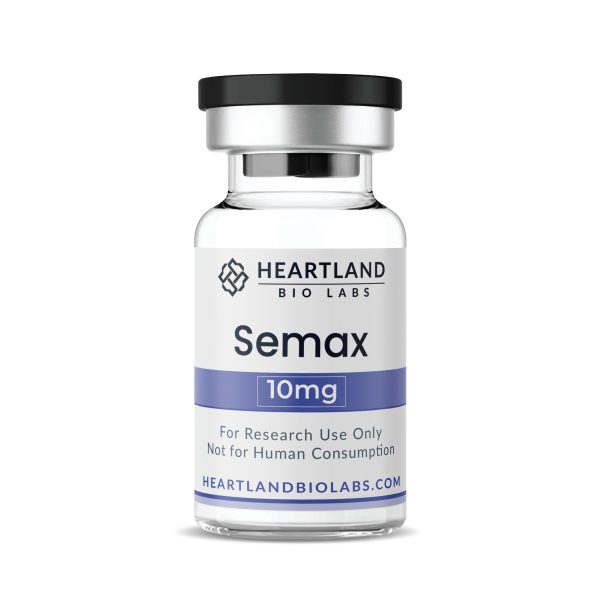
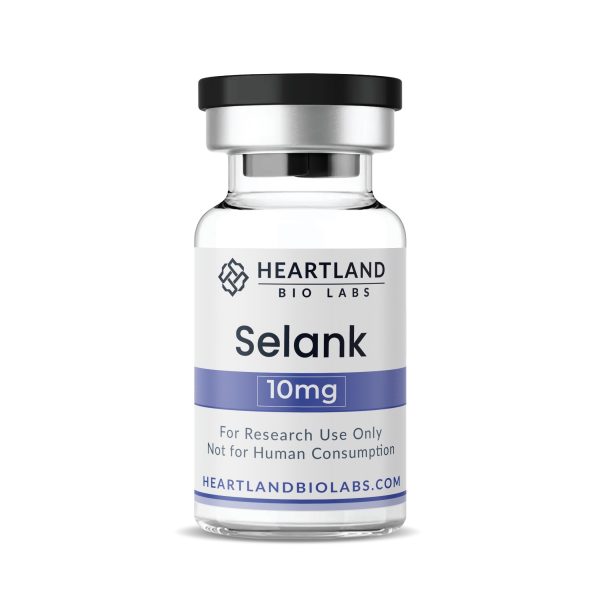
For research use only. Not for human consumption. Every product ships with a published certificate of analysis.