
How to Reconstitute Peptides
The complete laboratory procedure for returning a lyophilized peptide to solution: the step-by-step technique, how to choose a bacteriostatic water volume, blend vials, and storage before and after — with the math handled by our reconstitution calculator.
What you need
- The lyophilized peptide vial — the dry, freeze-dried cake as shipped. Check the lot's certificate of analysis for net content and storage notes before starting.
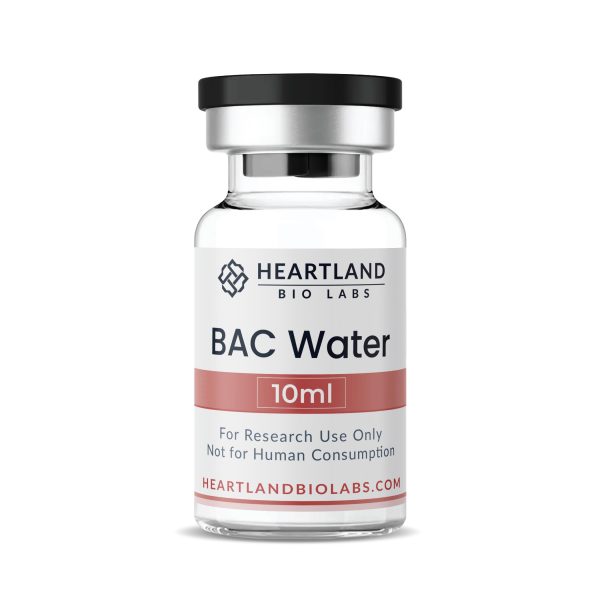
- Bacteriostatic water — sterile water with 0.9% benzyl alcohol, the standard diluent for multi-withdrawal laboratory preparations. Plain sterile water is suitable only for single-use preparation.
- Sterile syringes — one to transfer the diluent; a fine-gauge insulin-type (U-100) syringe measures small aliquot volumes afterward.
- Alcohol swabs — 70% isopropyl, one per septum.
Step-by-step: reconstituting a lyophilized peptide
- Equilibrate the vials. Remove the lyophilized peptide vial and the bacteriostatic water vial from cold storage and allow both to reach room temperature. Condensation on a cold vial can carry moisture into the septum area; equilibration also improves dissolution.
- Sanitize both septa. Wipe the rubber stopper of the peptide vial and the diluent vial with a fresh 70% isopropyl alcohol swab and let them air-dry. The stoppers are the only surfaces the needle passes through; they must stay aseptic.
- Decide the diluent volume. The volume of bacteriostatic water added determines the concentration of the finished solution — mass in the vial divided by volume added. Work the numbers before mixing; the reconstitution calculator reports the concentration and per-aliquot volumes for any combination.
- Draw the diluent. Using a sterile syringe, draw the chosen volume of bacteriostatic water from its vial. Drawing an equal volume of air into the diluent vial first equalizes pressure and makes the draw smoother.
- Introduce the water slowly, down the vial wall. Insert the needle through the peptide vial's septum at an angle and direct the stream down the inside wall of the vial — never as a jet onto the powder. Direct force can shear and denature fragile peptide molecules.
- Swirl gently until clear — never shake. Rotate the vial slowly until the cake dissolves completely. Most peptides clear within a few minutes; letting the vial rest between gentle swirls beats agitation. Shaking causes foaming and shear degradation. A solution that stays cloudy or shows particles is not used.
- Label and store. Record the compound, date, diluent volume and resulting concentration on the vial, and refrigerate at 2–8 °C protected from light. Bacteriostatic preparations are conventionally held up to about 28 days; plain sterile-water preparations are used promptly.
How much bacteriostatic water to add
The most common reconstitution question has no single answer, because the volume added is a choice: it sets the concentration of the finished solution, and the right concentration is the one that makes your aliquots an accurately measurable volume. The arithmetic is one line — concentration = peptide mass ÷ diluent volume. The table below shows the concentration every common vial-and-volume combination produces:
| Vial size | 1 mL | 2 mL | 3 mL | 5 mL | Open in calculator |
|---|---|---|---|---|---|
| 5 mg | 5 | 2.5 | 1.67 | 1 | Calculate → |
| 10 mg | 10 | 5 | 3.33 | 2 | Calculate → |
| 15 mg | 15 | 7.5 | 5 | 3 | Calculate → |
| 20 mg | 20 | 10 | 6.67 | 4 | Calculate → |
| 50 mg | 50 | 25 | 16.67 | 10 | Calculate → |
Two practical bounds: an aliquot under about 2 units (0.02 mL) on a U-100 syringe measures poorly — add more diluent to make the same aliquot a larger volume — and a typical 3 mL vial holds at most about 3 mL of diluent. For the per-aliquot volumes and syringe-unit figures behind any combination, use the peptide reconstitution calculator.
Reconstituting GLOW, KLOW and other blend vials
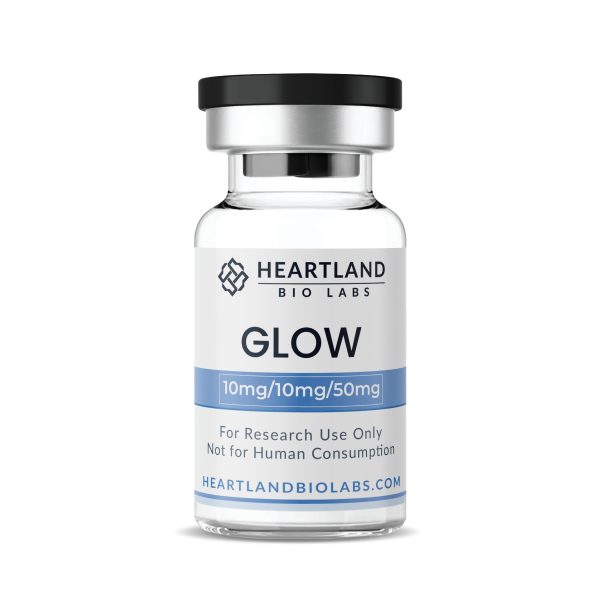
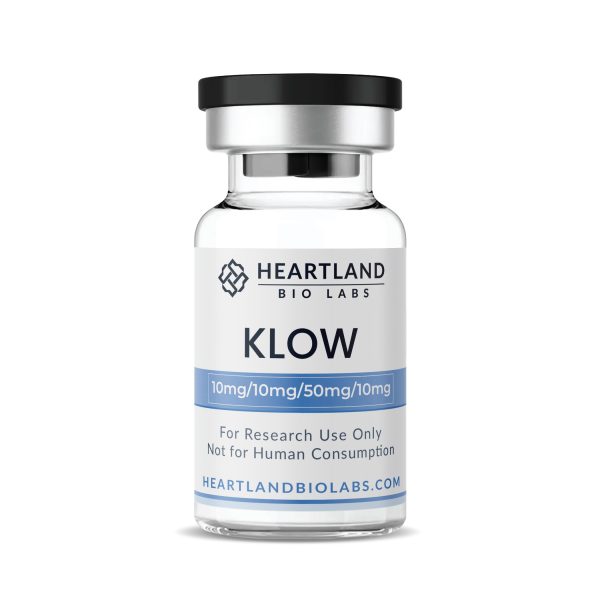
A blend vial contains several compounds lyophilized together in one cake — GLOW (BPC-157, TB-500, GHK-Cu) and KLOW (the same three plus KPV) are the common examples. The label mass of a blend — a 70 mg GLOW vial, an 80 mg KLOW vial — is the combined nominal mass of all components, so the procedure and the math are identical to a single-compound vial: divide the total mass by the diluent volume for the total concentration. The per-component breakdown for a given lot is on its certificate of analysis. Blends are prepared exactly as described above — diluent down the vial wall, gentle swirling; the multi-component cake may take a few extra minutes to clear.
Storing peptides before and after reconstitution
Before reconstitution (lyophilized powder)
The dry form is the stable form. Sealed lyophilized vials are stored protected from light and moisture, refrigerated at 2–8 °C for near-term use or frozen at −20 °C for longer holding. Reconstitute when the material is needed, not in advance — every product page and certificate of analysis lists the storage conditions for that compound.
After reconstitution (solution)
Refrigerate at 2–8 °C, protected from light. Bacteriostatic-water preparations are conventionally held up to about 28 days in laboratory practice — the benzyl alcohol suppresses bacterial growth between withdrawals — while plain sterile-water preparations are used promptly. Never refreeze a solution: freeze–thaw cycles degrade peptides, and a solution that turns cloudy or develops particulates is discarded from research use.
Common errors
The mistakes that produce bad preparations are nearly always arithmetic, not technique: confusing mg with mcg (a thousandfold error), reading U-100 syringe “units” as a quantity of peptide rather than a volume marking, dividing by the vial's nominal capacity instead of the diluent actually added, and treating the label mass as exact instead of checking the lot's measured net content. Each is broken down, with the correct arithmetic, in the common reconstitution errors section of the calculator page.
Research peptides & lab supplies
Every product ships with a published certificate of analysis you can read before ordering.
Reconstitution questions, answered
- How much bacteriostatic water do I add to a 5 mg or 10 mg vial?
- There is no single correct volume — the volume sets the concentration, and the right concentration depends on how the solution will be measured out afterward. Common laboratory practice for 5–10 mg research vials is 1–3 mL of bacteriostatic water: 2 mL into a 5 mg vial yields 2.5 mg/mL, and 2 mL into a 10 mg vial yields 5 mg/mL. The reconstitution calculator on this site reports the concentration and per-aliquot volumes for any combination before anything is mixed.
- How are multi-compound blend vials like GLOW or KLOW reconstituted?
- Exactly like a single-compound vial: the label mass of a blend (for example a 70 mg GLOW or 80 mg KLOW vial) is the combined nominal mass of all components in one lyophilized cake, so the same mass-÷-volume arithmetic applies to the total. The certificate of analysis for the lot lists the per-component breakdown. Blends dissolve the same way — diluent down the vial wall, gentle swirling until clear.
- How long does a peptide take to dissolve after adding the water?
- Most lyophilized peptides clear within a few minutes of gentle swirling at room temperature. Larger or more hydrophobic sequences can take 10–15 minutes; letting the vial sit undisturbed between gentle swirls works better than agitating it. A solution that remains cloudy or shows particulates after that indicates incomplete dissolution or degraded material and is not used in research work.
- How should peptides be stored before reconstitution?
- Lyophilized (dry powder) vials are stored sealed, protected from light and moisture, and cold: refrigeration at 2–8 °C is suitable for the near term, and freezing at −20 °C is standard for longer holding. The dry form is far more stable than any solution — reconstitution is done when the material is needed, not in advance. Each product page and certificate of analysis states the storage conditions for that compound.
- How should peptides be stored after reconstitution, and for how long?
- Reconstituted solutions are stored refrigerated at 2–8 °C, protected from light. Preparations in bacteriostatic water are conventionally held up to about 28 days in laboratory practice — the 0.9% benzyl alcohol inhibits bacterial growth between withdrawals — while preparations in plain sterile water are used promptly. Solutions are not refrozen: freeze–thaw cycles degrade peptides.
- Can sterile water be used instead of bacteriostatic water?
- For a single-use preparation, yes — sterile water for injection dissolves peptides identically. It contains no antimicrobial agent, so a vial that will be entered more than once should be prepared with bacteriostatic water instead. Saline and dextrose solutions are not standard peptide diluents.
- Does the water go into the peptide vial, or the peptide into the water?
- The diluent is always drawn first and introduced into the peptide vial — slowly, directed down the inside wall of the vial rather than jetted onto the powder. A direct stream can shear and denature the peptide. The reverse (transferring lyophilized powder into a water vial) risks material loss and is not standard practice.
All products sold by Heartland Bio Labs are intended exclusively for in vitro research, laboratory investigation, and ex vivo studies by qualified scientific personnel. These products are not approved by the FDA or any regulatory authority for human or animal use. They are not drugs, dietary supplements, food additives, or medical devices.
These products are not for human consumption, self-administration, veterinary use, or therapeutic application of any kind. No information on this website constitutes medical advice, treatment recommendations, or dosage guidance.
By purchasing from Heartland Bio Labs, the buyer represents that they are a qualified researcher or institution using these materials solely for lawful laboratory research. See our full Research Use Policy.