
MOTS-c has the strangest origin story in the catalog: it is encoded not in the nuclear genome like nearly every other peptide, but inside the mitochondrial DNA itself. This overview covers what MOTS-c is, why its genomic address made it a landmark finding, what researchers use the synthetic version for, and how it is verified.
What MOTS-c Is
MOTS-c is a 16 residue peptide whose coding sequence sits within the mitochondrial 12S ribosomal RNA gene. It belongs to a small class called mitochondrial derived peptides, molecules hiding inside sequences long assumed to code only for the machinery of the mitochondrion itself. Research grade MOTS-c is chemically synthesized to match that natural sequence, giving researchers a defined tool without needing to isolate the scarce natural material.
Why the Origin Matters
Finding a signaling peptide encoded in mitochondrial DNA rewired assumptions about what the mitochondrial genome does. It positioned the organelle as a sender of instructions rather than only a recipient, and MOTS-c became a primary tool for studying that mitochondria to nucleus communication in cell and metabolism models. It is studied in metabolic contexts, but it is not an incretin and works through entirely different biology than the receptor agonists in the metabolic category.
Stability and Handling
Lyophilized MOTS-c follows the standard small peptide pattern: stable stored cold, dry, and protected from light, with refrigerated solutions, gentle mixing, and minimal freeze thaw cycling once reconstituted.
Quality Verification
A 16 residue synthetic peptide is verified with the catalog standard pair of methods: mass spectrometry to confirm the exact sequence identity and HPLC to quantify purity, with net peptide content linking the certificate to the vial label. Certificates for our material are published through the COA portal, and our guide to reading a certificate of analysis for peptides explains each field and why purity and content are different numbers.
Research Use Only
MOTS-c is supplied strictly for laboratory research by qualified professionals. It is not for human or veterinary use of any kind. Nothing in this overview is a protocol, a recommendation, or a claim of therapeutic effect.
Research compounds in this article

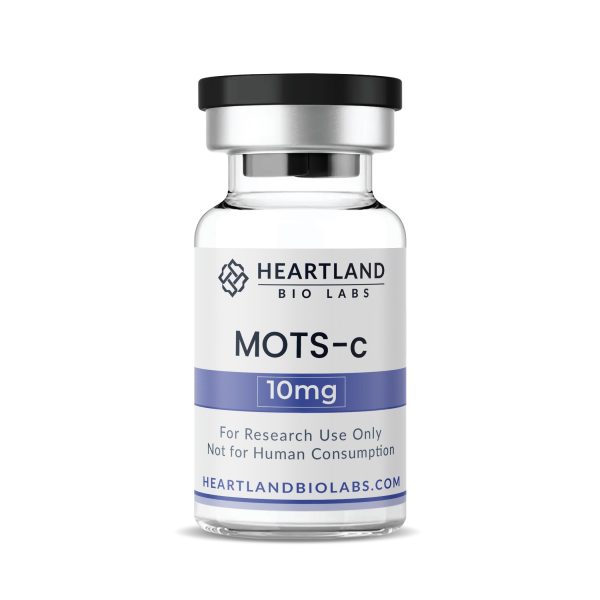
For research use only. Not for human consumption. Every product ships with a published certificate of analysis.