
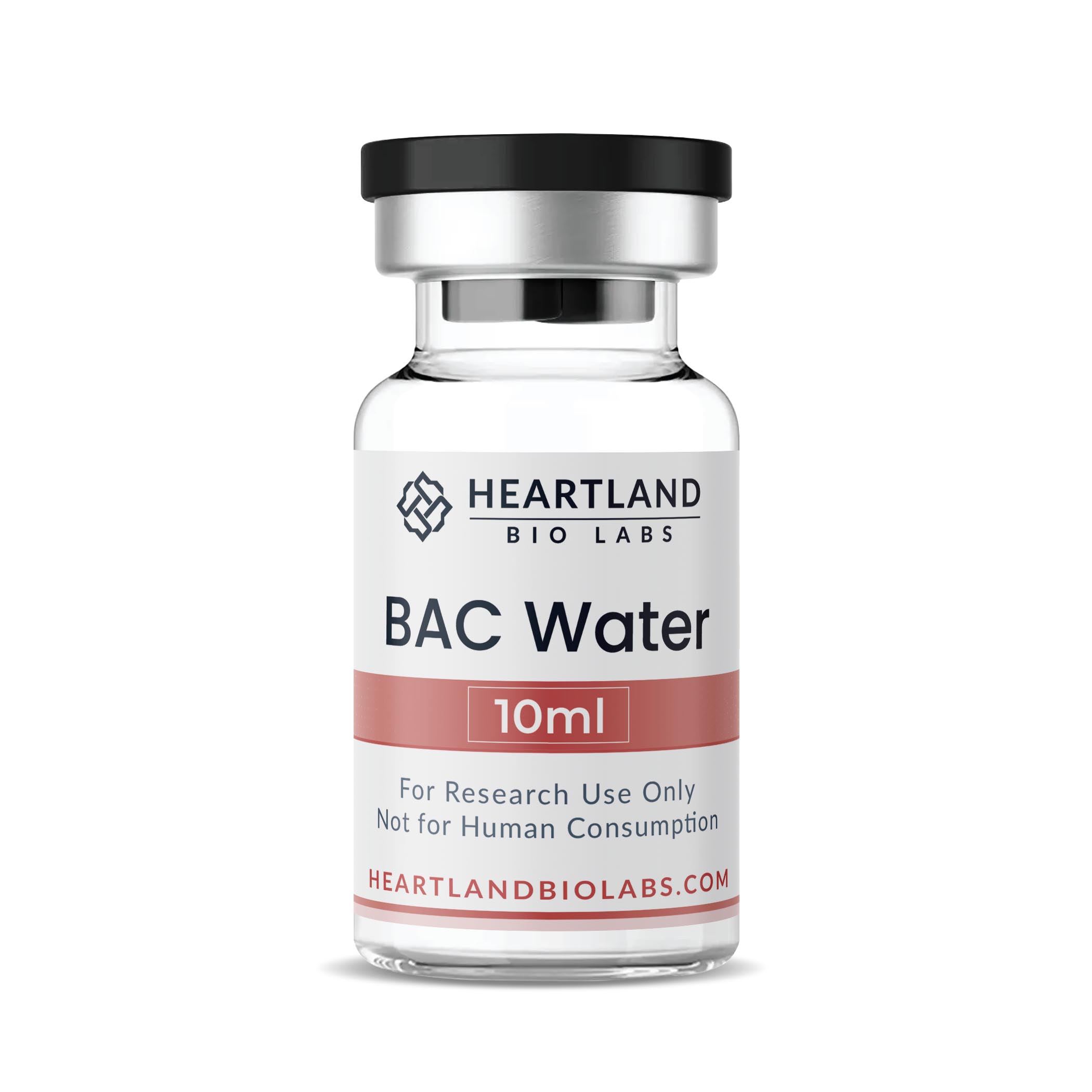
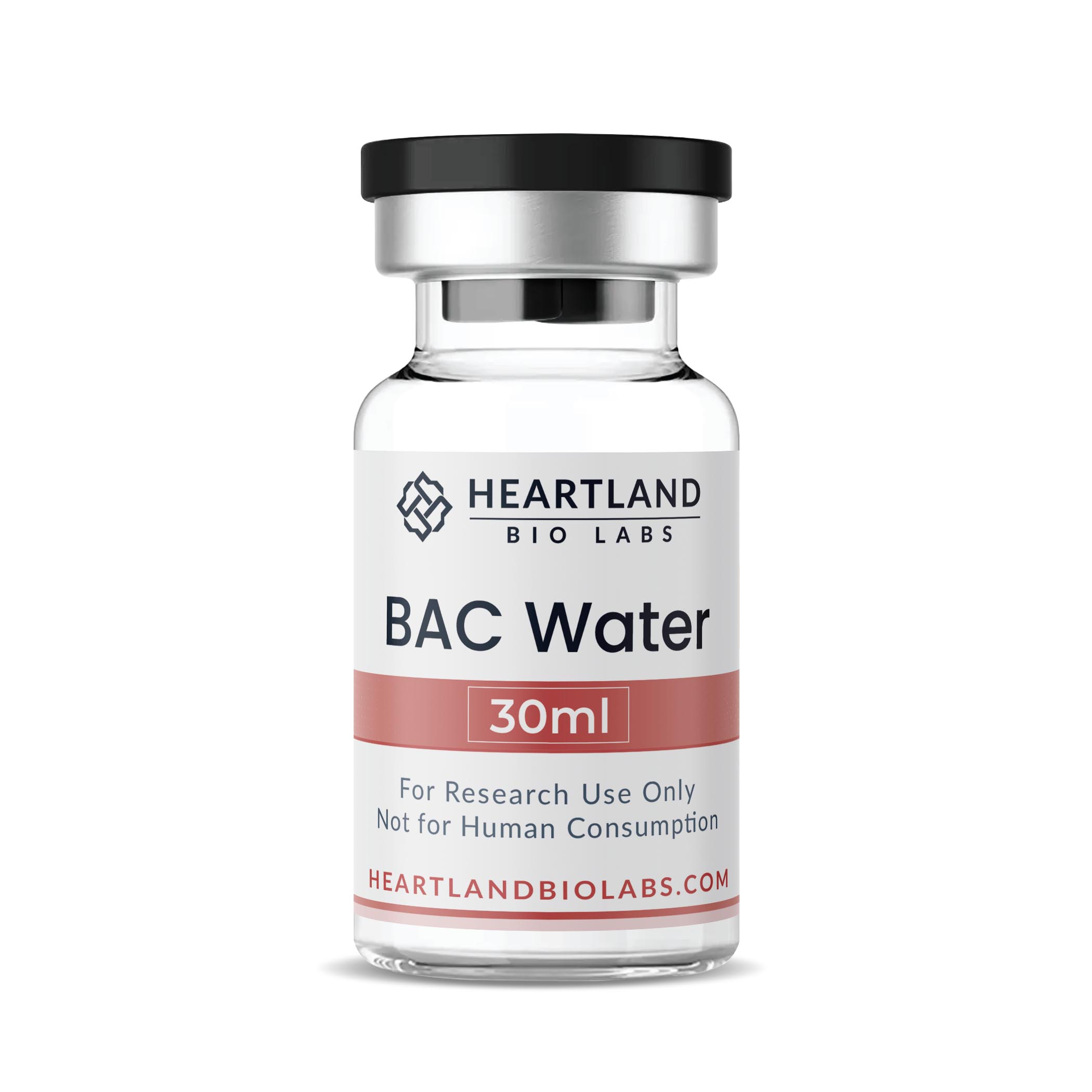
What Is Bacteriostatic Water?
Bacteriostatic water, usually shortened to BAC water, is sterile water containing 0.9% benzyl alcohol by volume. The benzyl alcohol acts as a bacteriostatic agent, meaning it prevents bacteria from multiplying inside the vial rather than killing organisms outright. That single property is what separates it from every other laboratory water product: once a needle has pierced the septum of a plain sterile water vial, that vial is compromised, while a bacteriostatic vial remains usable for repeated withdrawals over an extended period. For any laboratory working with compounds that are reconstituted in small quantities over days or weeks, that difference determines which product belongs on the bench.
Bacteriostatic Water vs Sterile Water
The two are frequently confused, and the distinction matters. Sterile water for injection contains no preservative at all. It is sterile only until first use, which makes it a single-entry product by design. Bacteriostatic water sacrifices absolute purity for practicality: the 0.9% benzyl alcohol keeps the vial protected through multiple entries. For research workflows, sterile water suits a one-time, use-everything preparation, while bacteriostatic water suits the far more common pattern of drawing small amounts from the same vial across many sessions. One caution from the analytical side: benzyl alcohol is a mild solvent, and a small number of compounds are sensitive to it, so protocols for those materials specify preservative-free diluent.
Why Laboratories Use It for Peptide Reconstitution
Lyophilized peptides, including every compound we stock from BPC-157 to retatrutide, are shipped as a freeze-dried powder that must be returned to solution before laboratory use. Bacteriostatic water is the default reconstitution medium in published preclinical work for a plain reason: peptide vials are almost never consumed in one session. A reconstituted vial stored under refrigeration is drawn from repeatedly, and the preservative protects the solution between withdrawals. The technique matters as much as the diluent, and directing the water stream down the vial wall rather than onto the powder itself, then swirling gently instead of shaking, protects fragile peptide structures during dissolution.
Handling and Storage
Store bacteriostatic water at controlled room temperature away from direct light. Once a vial has been entered, standard laboratory convention treats it as usable for about 28 days, a practice inherited from pharmaceutical compounding guidance and widely adopted in research settings. Discard any vial with visible particulate matter or cloudiness. Reconstituted peptide solutions, unlike the water itself, belong in the refrigerator, and each compound page on this site carries its own storage notes.
Vial Sizes
We stock 10ml vials, sized for typical research workflows where a single vial reconstitutes many peptide vials. A 30ml size is listed for laboratories with higher throughput and joins the catalog when stocked. Bacteriostatic water pairs with everything in our supplies category and is the companion purchase to nearly every peptide we carry.
Quality Verification
For a closer look at what the 0.9 percent benzyl alcohol actually does and how bacteriostatic water differs from sterile water for injection, read our guide to bacteriostatic water for peptides.
Our bacteriostatic water is manufactured to USP standards for sterility and composition. Peptide compounds we stock are independently tested per product, with Certificates of Analysis published in our testing data library and matched to vials through the COA portal.
Pairing bacteriostatic water with a lyophilized vial raises one practical question: how much to add. The answer depends on the concentration a protocol calls for, and the Heartland peptide calculator converts vial mass and diluent volume into concentration, volume-per-mass, and an aliquot plan in a few seconds.
Reconstitution math
Work out concentration (mg/mL), amount per volume and molarity for any vial size with the Semaglutide reconstitution calculator, Tirzepatide reconstitution calculator, Retatrutide reconstitution calculator, BPC-157 reconstitution calculator, TB-500 reconstitution calculator, GHK-Cu reconstitution calculator, general peptide calculator. For the bench procedure see how to reconstitute peptides.
Research Use Only
This product is sold for laboratory research use only. It is not for human or veterinary use, not a drug, food, or cosmetic, and may not be used in diagnostics or therapeutics. By purchasing, the buyer confirms they are a qualified researcher and accepts our terms of sale.