
BPC-157 and TB-500 are the two most frequently paired names in repair-focused peptide research, and the most common question researchers bring to either compound is how it relates to the other. The honest answer is that they are not competitors at all. They come from unrelated source proteins, act through unrelated mechanisms, and earned their places in the literature through entirely different bodies of work. This comparison walks through both compounds side by side: where each comes from, what each actually does in published research, and how a study design decides between one, the other, or both.
Two Very Different Origins
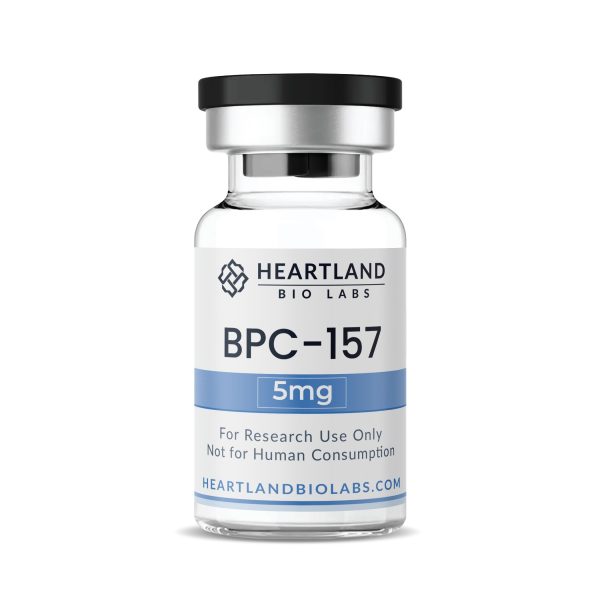
BPC-157 (Body Protection Compound-157) is a synthetic 15-amino acid fragment derived from a protective protein identified in human gastric juice. Its research history began with gastrointestinal models, where investigators studied why the stomach’s own lining resists the acid environment that digests everything else, and expanded outward from there into broader tissue-protection work.
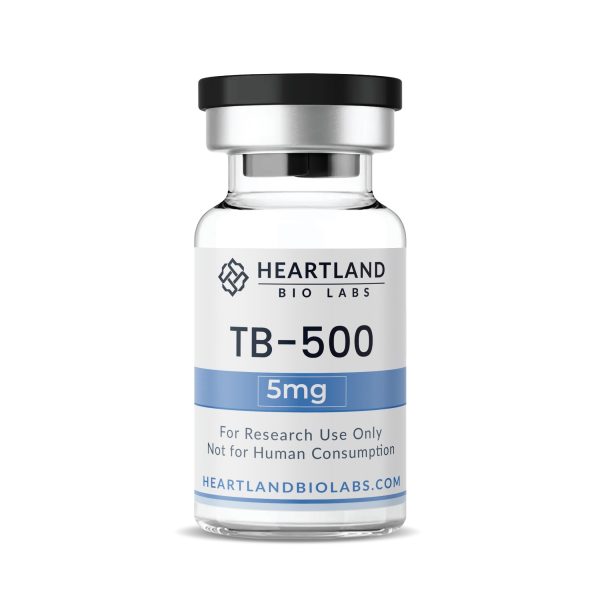
TB-500 is a synthetic fragment of Thymosin Beta-4, a 43-amino acid protein present in nearly every cell type and concentrated in blood platelets and wound fluid. The fragment reproduces the parent protein’s actin-binding domain, the short sequence responsible for most of its measured activity. Where BPC-157’s story starts in the gut, TB-500’s starts in the cytoskeleton.
Mechanism: Signaling Pathways vs the Actin Reserve
The mechanistic contrast is what makes the two compounds genuinely complementary rather than interchangeable. Published preclinical work on BPC-157 centers on signaling: angiogenesis-related pathways, interactions with the nitric oxide system, and modulation of growth factor expression in injury models. It behaves like a signaling molecule, nudging processes that are already part of the repair program.
Thymosin Beta-4, and by extension TB-500, is the cell’s principal actin-sequestering molecule. Cells keep a large reserve of unpolymerized actin bound to Thymosin Beta-4 and draw on it to build the structures that let them change shape and move. That places TB-500 research at the center of cell migration: how endothelial cells travel to form new vessels and how fibroblasts move across a wound bed in culture. One compound is studied for what it signals, the other for what it supplies.
What the Research Literature Actually Covers
The BPC-157 literature is dominated by rodent injury models spanning tendon, ligament, muscle, gastrointestinal tissue, and vascular studies. The Thymosin Beta-4 literature leans toward cell-culture migration assays, corneal and dermal models, and a well-known line of cardiac research. There is overlap in wound-healing models, which is precisely where combination studies appear, but the centers of gravity are distinct. A researcher reading both literatures is reading two different scientific conversations that happen to meet at tissue repair.
Stability and Handling
Both compounds are supplied lyophilized and share standard peptide handling: refrigerated storage, protection from light and humidity, reconstitution with bacteriostatic water, and no repeated temperature cycling. BPC-157 is notable in the literature for unusual stability, including resistance to gastric conditions, which is part of why it became such a widely used research tool. TB-500’s cyclization-free linear fragment is somewhat less rugged but still handles well relative to full-length proteins.
One, the Other, or Both?
The decision is a study design question, not a ranking. Programs isolating a single mechanism need a single compound: BPC-157 for signaling-pathway questions, TB-500 for actin and migration questions. Programs studying combined exposure, or screening broadly before narrowing, frequently use both, and because the mechanisms are unrelated, combination designs examine complementary processes rather than doubling up on one. That logic is why our catalog carries them individually and as a BPC-157 + TB-500 dual blend with 5mg of each compound, and why the multi-compound GLOW and KLOW blends use the same pair as their backbone alongside GHK-Cu.
Quality Verification Applies Equally
Whichever direction a research program takes, identity and purity verification matter the same way. Every compound we stock is tested per product by an independent analytical laboratory, with identity confirmed by mass spectrometry and purity assessed by HPLC, and Certificates of Analysis published openly in our testing data library.
Research Use Only
Both compounds are sold strictly for laboratory research use. They are not for human or veterinary use and may not be used in diagnostics or therapeutics. This article is educational material about the published preclinical literature and makes no therapeutic claims.
Research compounds in this article
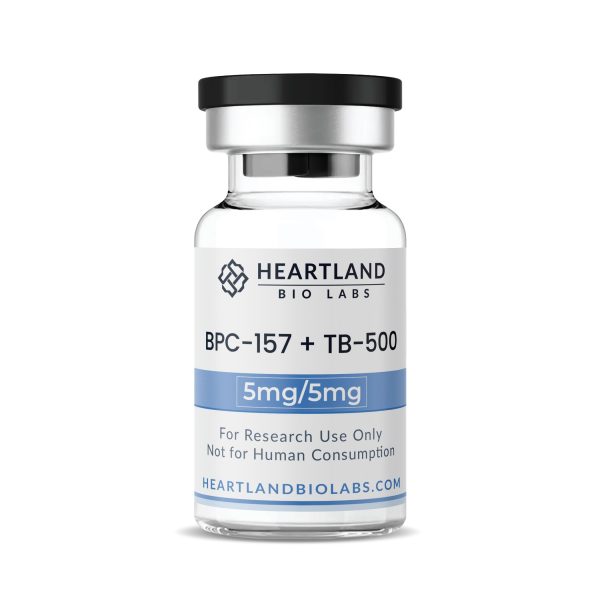
BPC-157 + TB-500 (Dual Peptide Blend)
COA • BPC-157 98.78% · TB-500 97.98% Purity
In stock · Ships today
For research use only. Not for human consumption. Every product ships with a published certificate of analysis.