Free shipping $200+ · Order by 2pm CT, ships today from Tulsa, OK · Research Use Only — Not for human consumption · Documentation you can verify beats claims you have to trust · Questions? (405) 814-0022
Research Use Only — Not for Human Consumption

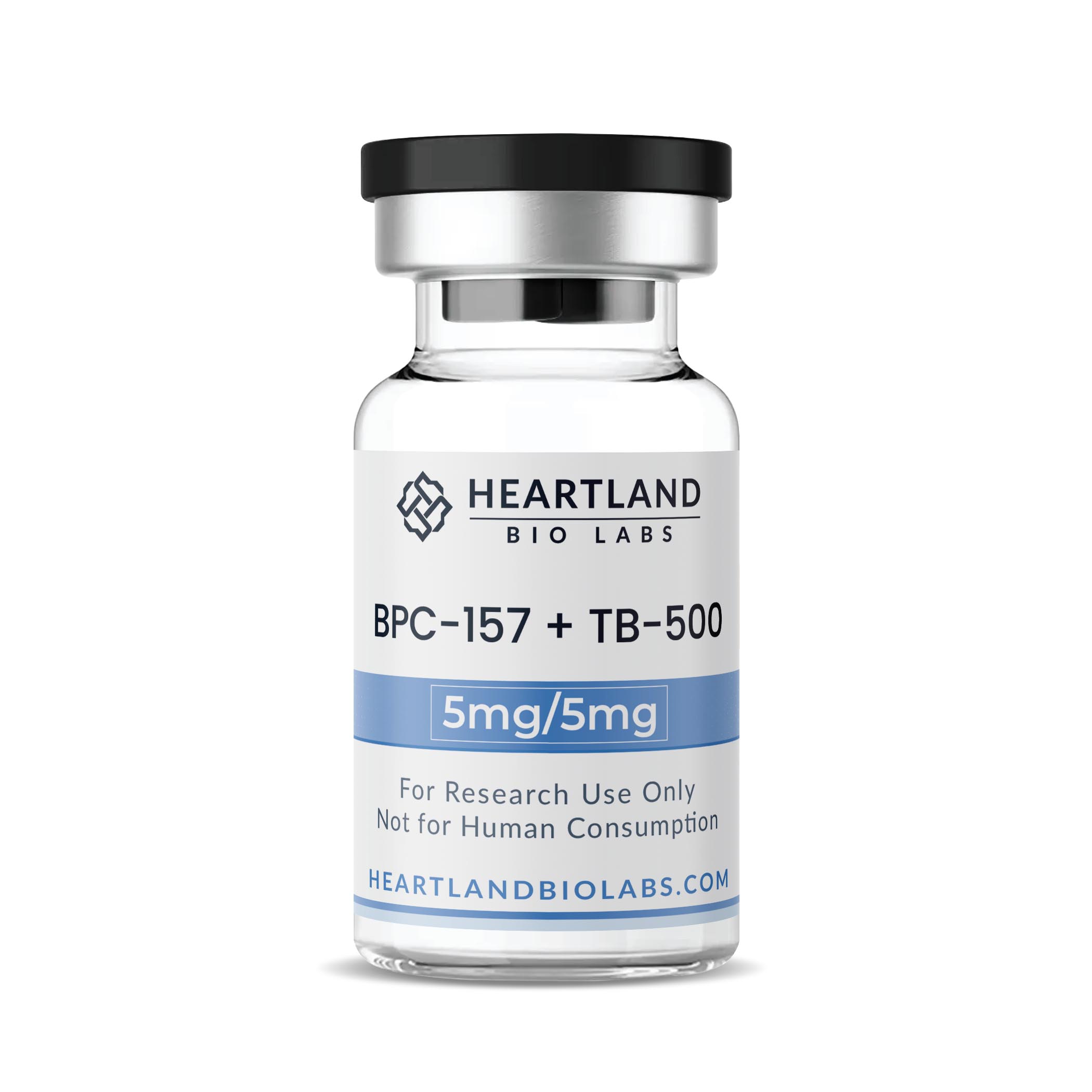
BPC-157 + TB-500 (Dual Peptide Blend)

  • BPC-157 98.78% · TB-500 97.98% HPLC
  • COA Per product

The BPC-157 + TB-500 dual blend co-formulates two of the most studied synthetic peptides in preclinical repair research in a single vial, with 5mg of each compound. The two peptides come from unrelated origins and act through different mechanisms, which is exactly why research programs examine them together. Supplied by Heartland Bio Labs as a lyophilized research compound of verified purity.

$80.00

Same-day shipping if you order today

100% Quality Guarantee If a product ever fails its COA spec, we replace it free or refund — no questions.

What Is the BPC-157 + TB-500 Blend?

This dual blend combines BPC-157 and TB-500 in a single co-lyophilized vial, 5mg of each compound for 10mg of total peptide content. Rather than a proprietary mixture with undisclosed ratios, the composition is stated by mass so a researcher knows exactly what a reconstituted solution contains. Both compounds are also available individually, and the pages for each cover their chemistry in depth.

Two Different Origins, Two Different Mechanisms

What makes this pairing interesting to research programs is how little the two compounds have in common. BPC-157 is a 15-amino acid fragment derived from a protective protein found in gastric juice, studied chiefly in models of tissue protection and repair signaling. TB-500 reproduces the actin-binding region of Thymosin Beta-4, the cell's principal actin-sequestering protein, placing it at the center of cell migration and motility research. Different source proteins, different receptors and pathways, different bodies of literature. When two compounds overlap this little mechanistically, combination studies can examine complementary processes rather than redundant ones.

Single Compounds or the Blend?

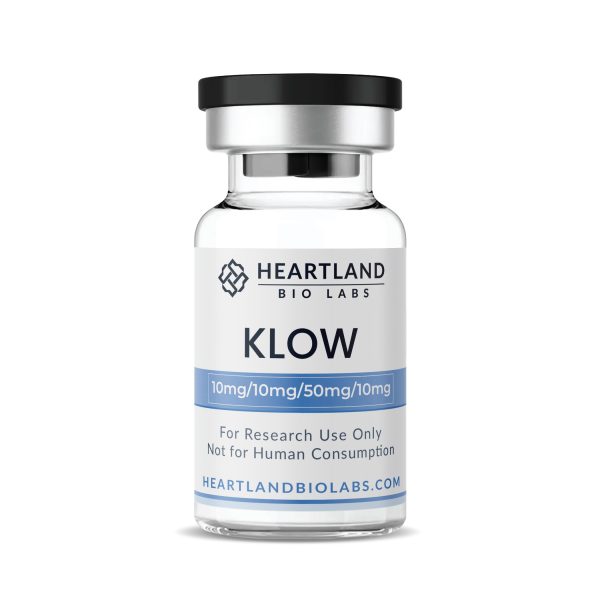
The choice is a study design question. Programs isolating a single mechanism need the individual compounds, since a blend cannot tell you which component produced an observed effect. Programs studying combined exposure, or screening broadly before narrowing focus, often prefer the convenience and fixed ratio of a co-formulated vial. Researchers wanting broader multi-compound designs can also look at GLOW, which adds GHK-Cu to this same pair, and KLOW, which extends it further with KPV. The blend family shares a common backbone, and the per-component masses are stated on every blend page.

Research Applications

The preclinical literature around these two compounds spans wound and tissue models, cell migration assays, angiogenesis studies, and musculoskeletal research. The combination appears in study designs examining whether unrelated repair-associated pathways produce additive effects in vitro. All Heartland Bio Labs compounds are supplied strictly for laboratory research by qualified professionals.

Quality Verification

Every compound we stock is tested per product by an independent analytical laboratory, with identity confirmed by mass spectrometry and purity assessed by HPLC. For blends, verification at the component level matters more than a single number, and Certificates of Analysis are published openly in our testing data library with customer lookup through the COA portal.

Handling and Storage

This combination is often searched under a nickname. Our guide to the wolverine peptide stack covers where the term comes from and how the two components complement each other in research contexts.

The blend is supplied as a lyophilized powder in sealed vials. Store lyophilized vials refrigerated, protected from light and humidity. Reconstitute with bacteriostatic water for laboratory use, keep solutions refrigerated, and avoid repeated temperature cycling, which degrades both components.

Reconstitution math

Work out concentration (mg/mL), amount per volume and molarity for any vial size with the BPC-157 reconstitution calculator, TB-500 reconstitution calculator, general peptide calculator. For the bench procedure see how to reconstitute peptides.

Research Use Only

This product is sold for laboratory research use only. It is not for human or veterinary use, not a drug, food, or cosmetic, and may not be used in diagnostics or therapeutics. By purchasing, the buyer confirms they are a qualified researcher and accepts our terms of sale.
Both BPC-157 and TB-500 have extensive individual publication records in the preclinical research literature. Researchers often investigate them in combination to examine potential complementary or additive interactions in cellular biology models, angiogenic signaling, and connective tissue cell behavior. Published studies have explored individual and co-administration models in animal tissue research settings. The combined format provides convenience for research protocols requiring concurrent use of both compounds.

This compound is supplied strictly for research purposes. No clinical or therapeutic application is implied or represented.

Analytical specifications for this product are available on request.

For research and laboratory use only. Not for human or veterinary consumption. Not evaluated by the FDA. See full site disclaimer.

Every product is tested before release. Results for all certificates for this product are published below, including superseded certificates so previously purchased material remains verifiable.

StrengthLotPurityMethodReportedCertificate
10mg (5mg + 5mg)HBL-20260806-VB2SBPC-157 98.78% · TB-500 97.98%HPLC (chromatographic purity, % of total peak area)August 18, 2026View certificate

Handling Information

Handle BPC-157 + TB-500 blend under standard laboratory conditions. Use appropriate PPE. Reconstitute carefully to minimize peptide degradation. Avoid repeated freeze-thaw cycles. Each component maintains its individual characteristics within the blend. This compound is intended for qualified research use only.

Storage Requirements

  • Long-term (lyophilized): Store at -20°C, protected from light and moisture
  • Short-term (reconstituted): Store at 4°C; use within 28 days
  • Keep in original sealed vial until point of use
How should I store this peptide?+

Lyophilized peptides should be stored at −20°C in a dry, light-protected environment. Avoid repeated freeze-thaw cycles. Once reconstituted, store at 2-8°C and use within 4-8 weeks depending on the compound.

What should I reconstitute it with?+

Bacteriostatic water or sterile water for research use. We recommend our companion BAC Water for consistency. Specific reconstitution volume depends on your research protocol — refer to the Specifications tab for solubility data.

How quickly do orders ship?+

Orders confirmed before 2:00 PM CT ship the same business day from our facility in Tulsa, OK. Standard US transit is 2-5 business days. Tracking provided at shipment.

Is the COA verified independently?+

Yes. Every product is tested by HPLC for purity (target COA-verified purity) and mass spectrometry for molecular identity before release. The COA is generated from the actual test data, not a generic template.

Can I get bulk or institutional pricing?+

Yes — qualified research facilities and high-volume orders receive tiered pricing. Contact us with your institution information and target quantities.

Further reading

View this product's Certificate of Analysis

Every product is independently verified — HPLC purity, mass spec identity, lot number, storage parameters. Click below to view or download.

Look up COA in portal →
Research Use Only: This product is sold by Heartland Bio Labs for research and laboratory use only. Not intended for human or veterinary consumption, administration, or therapeutic use. This product has not been evaluated by the Food and Drug Administration. Not a drug. Not a dietary supplement. Researchers are responsible for compliance with all applicable regulations.