Free shipping $200+ · Order by 2pm CT, ships today from Tulsa, OK · Research Use Only — Not for human consumption · Documentation you can verify beats claims you have to trust · Questions? (405) 814-0022
Research Use Only — Not for Human Consumption

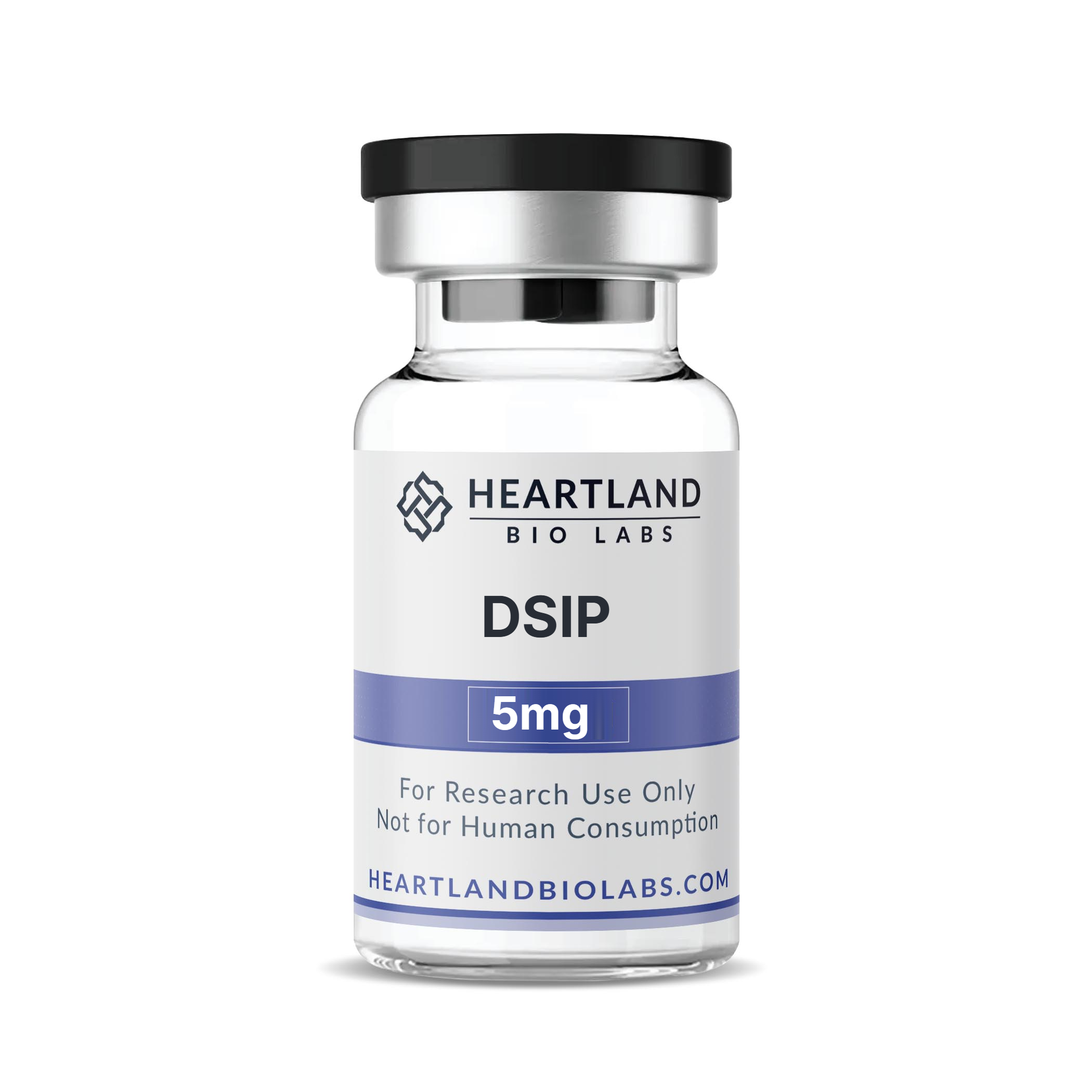
DSIP (Delta Sleep-Inducing Peptide)

DSIP (Delta Sleep-Inducing Peptide) is a nonapeptide first isolated in 1977 from the cerebral venous blood of rabbits during induced slow-wave sleep. Nearly five decades later its receptor remains unidentified, making it one of the most studied yet least resolved compounds in neuropeptide research. Supplied by Heartland Bio Labs as a lyophilized research compound of verified purity.

$39.00

Same-day shipping if you order today

100% Quality Guarantee If a product ever fails its COA spec, we replace it free or refund — no questions.

What Is DSIP?

Delta Sleep-Inducing Peptide, universally shortened to DSIP, is a nine-amino acid peptide with one of the more memorable origin stories in neuropeptide science. In 1977, Swiss researchers led by Guido Schoenenberger isolated it from the cerebral venous blood of rabbits in electrically induced slow-wave sleep, and named it for the delta-wave sleep state it appeared to promote when transferred to recipient animals. The name stuck, the peptide entered the research canon, and laboratories have been working to pin down its mechanism ever since.

A Compound Defined by Open Questions

Here is what makes DSIP scientifically unusual, and we state it plainly because it is exactly what a researcher should know before designing a study: after nearly fifty years, no dedicated DSIP receptor has been conclusively identified. The peptide crosses the blood-brain barrier, resists enzymatic degradation better than its small size would predict, and produces measurable effects in published sleep architecture and stress-response models, yet the binding site question remains open. Some investigators propose interactions with NMDA and GABAergic systems, others with MT1-type receptors. For a research chemical supplier to pretend this is settled would be dishonest; for a researcher, the unresolved mechanism is precisely the opportunity.

What the Research Examines

The published literature clusters in three areas: sleep architecture studies measuring delta-wave activity in animal models, stress-response work examining effects on the hypothalamic-pituitary-adrenal axis, and oxidative stress models in neural tissue. DSIP sits in the same neuropeptide research family as Semax and Selank, the Russian-literature compounds in our cognitive and longevity category, and study designs frequently draw on all three for CNS-focused panels.

Quality Verification

Every compound we stock is tested per product by an independent analytical laboratory, with identity confirmed by mass spectrometry and purity assessed by HPLC. At just nine residues, DSIP's mass signature is sharp and identity confirmation is unambiguous. Certificates of Analysis are published openly in our testing data library with vial lookup through the COA portal.

Handling and Storage

DSIP is supplied as a lyophilized powder in sealed vials. Store lyophilized vials refrigerated, protected from light and humidity. Once reconstituted with bacteriostatic water for laboratory use, keep solutions refrigerated and avoid repeated temperature cycling.

Reconstitution math

Work out concentration (mg/mL), amount per volume and molarity for any vial size with the general peptide calculator. For the bench procedure see how to reconstitute peptides.

Research Use Only

This product is sold for laboratory research use only. It is not for human or veterinary use, not a drug, food, or cosmetic, and may not be used in diagnostics or therapeutics. By purchasing, the buyer confirms they are a qualified researcher and accepts our terms of sale.
DSIP (Delta Sleep-Inducing Peptide) is a nonapeptide first isolated in 1977 from the cerebral venous blood of rabbits during induced slow-wave sleep. Nearly five decades later its receptor remains unidentified, making it one of the most studied yet least resolved compounds in neuropeptide research. Supplied by Heartland Bio Labs as a lyophilized research compound of verified purity.

Analytical specifications for this product are available on request.

For research and laboratory use only. Not for human or veterinary consumption. Not evaluated by the FDA. See full site disclaimer.

Please refer to the product label and specifications for storage and handling instructions.

How should I store this peptide?+

Lyophilized peptides should be stored at −20°C in a dry, light-protected environment. Avoid repeated freeze-thaw cycles. Once reconstituted, store at 2-8°C and use within 4-8 weeks depending on the compound.

What should I reconstitute it with?+

Bacteriostatic water or sterile water for research use. We recommend our companion BAC Water for consistency. Specific reconstitution volume depends on your research protocol — refer to the Specifications tab for solubility data.

How quickly do orders ship?+

Orders confirmed before 2:00 PM CT ship the same business day from our facility in Tulsa, OK. Standard US transit is 2-5 business days. Tracking provided at shipment.

Is the COA verified independently?+

Yes. Every product is tested by HPLC for purity (target COA-verified purity) and mass spectrometry for molecular identity before release. The COA is generated from the actual test data, not a generic template.

Can I get bulk or institutional pricing?+

Yes — qualified research facilities and high-volume orders receive tiered pricing. Contact us with your institution information and target quantities.

Further reading

View this product's Certificate of Analysis

Every product is independently verified — HPLC purity, mass spec identity, lot number, storage parameters. Click below to view or download.

Look up COA in portal →
Research Use Only: This product is sold by Heartland Bio Labs for research and laboratory use only. Not intended for human or veterinary consumption, administration, or therapeutic use. This product has not been evaluated by the Food and Drug Administration. Not a drug. Not a dietary supplement. Researchers are responsible for compliance with all applicable regulations.