
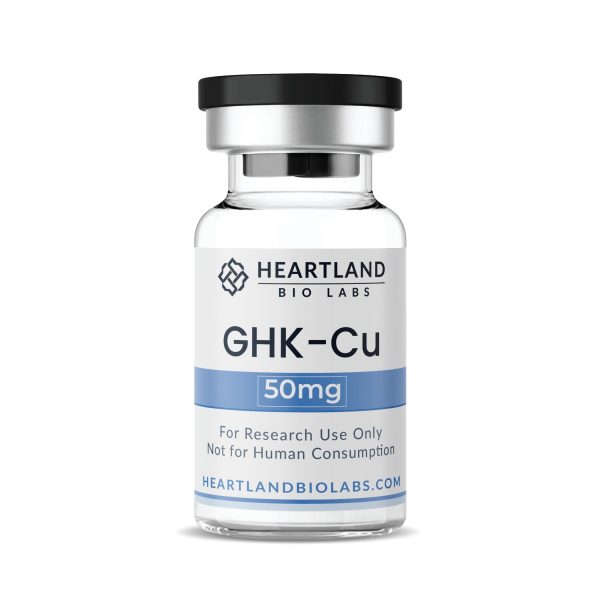
GHK-Cu is the only compound in the catalog you can identify at a glance, and one of the most searched peptides in this space. This overview covers what GHK-Cu is chemically, why the copper matters as much as the peptide, what the blue color does and does not tell you, and how a metal complex is verified differently from a plain peptide.
What GHK-Cu Is
GHK is a naturally occurring tripeptide, glycine, histidine, lysine, first isolated from human plasma. The histidine residue gives it an unusually strong affinity for copper, and GHK-Cu is the resulting complex: one tripeptide coordinated to one copper ion. Research grade material is supplied as the complex, not the free peptide, because the complex is the form studied in the literature on tissue and dermal biology models.
The Copper Is Not Decoration
The coordination chemistry is the point. Copper is a redox active metal that biological systems handle through dedicated carrier molecules, and GHK is one of the small carriers documented in plasma. Research on the complex is largely research on what copper delivery does in a model system, which means a vial of free GHK peptide with no copper is a different research material entirely, whatever the label says.
What the Blue Color Tells You
The copper coordination gives the complex its distinct blue color, which makes GHK-Cu the one material in the catalog carrying a visible identity cue: properly formulated material shows blue, and material that does not is worth questioning before any instrument time is spent. The color is a screen, not a certificate. It confirms copper coordination is present; it says nothing about purity or content. Our article on why GHK-Cu turns blue covers the chemistry in full.
Verifying a Metal Complex
A copper complex asks more of verification than a plain tripeptide. Identity testing must confirm the peptide sequence, and the analysis must account for the copper, since peptide content and complex content are different quantities. That is exactly the kind of distinction a real certificate makes explicit. Certificates for our material are published through the COA portal, and our guide to reading a certificate of analysis for peptides explains the fields, including net peptide content.
GHK-Cu in the Catalog
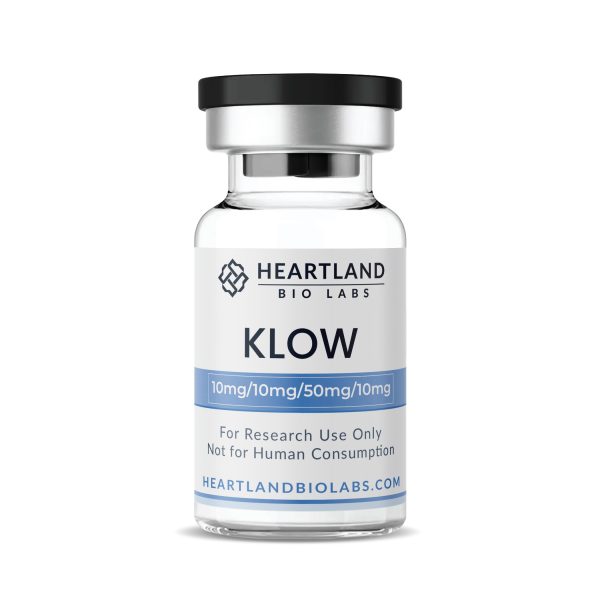
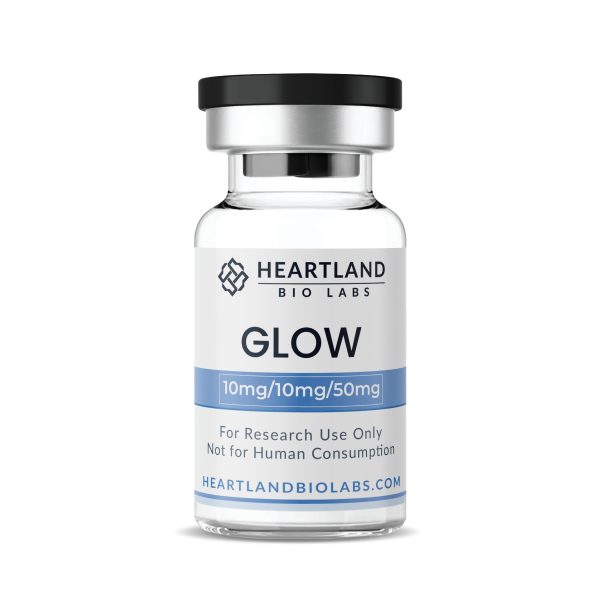
GHK-Cu anchors the dermal research category and appears as a 10 mg component in both GLOW and KLOW, where its color contributes the blue cast that properly formulated blend material shows. In a blend it is a minor component by mass, which is why component level certificates matter: a whole vial average would hide it.
Research Use Only
GHK-Cu is supplied strictly for laboratory research by qualified professionals. It is not for human or veterinary use of any kind. Nothing in this overview is a protocol, a recommendation, or a claim of therapeutic effect.
Research compounds in this article
For research use only. Not for human consumption. Every product ships with a published certificate of analysis.